

Where Is the Garden of Gethsemane? Can You Visit It Today?
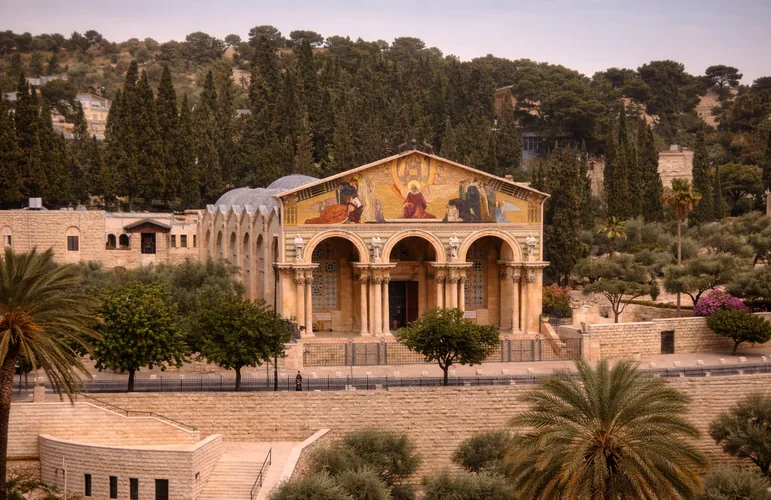
Imagine the quiet stillness of a cool Jerusalem night, the air thick with the scent of ancient olive trees, and the weight of the world resting on the shoulders of one man. For centuries, pilgrims have traveled to the Holy Land seeking to stand in the very place where Jesus Christ spent his final, agonizing hours of freedom before his betrayal and crucifixion. But as you plan your journey to retrace these sacred steps, one of the most common questions travelers ask is simply: where is the garden of gethsemane The Garden of Gethsemane is located in East Jerusalem at the foot of the Mount of Olives, just across the Kidron Valley from the Old City of Jerusalem. It lies next to the Church of All Nations and is traditionally recognized as the place where Jesus prayed before his arrest.
Beyond being a profound geographical landmark, Gethsemane remains one of the most spiritually resonant Christian sites in Israel. Many visitors planning a pilgrimage to Jerusalem wonder if this sacred place can still be visited today. The answer is yes; travellers can visit the traditional site on the Mount of Olives, walk among its ancient olive trees, and experience one of Jerusalem’s most meaningful biblical locations firsthand. Visitors today are drawn not just by the history, but by the enduring atmosphere of peace and reverence that still permeates this ancient olive grove. Whether you are coming to pray, to reflect, or simply to understand the biblical landscape, knowing exactly where it is and what to expect will deeply enrich your visit.
Where is the garden of gethsemane located?
When navigating the intricate and ancient streets of Jerusalem, understanding the exact garden of gethsemane location is essential. The site is situated in East Jerusalem, specifically nestled at the western foot of the Mount of Olives.
Because of its unique topography, the garden provides a stunning, unobstructed vantage point overlooking the Kidron Valley and the towering, ancient Old City walls just opposite it. To give you a sense of its surroundings, the garden sits directly adjacent to several other monumental landmarks. It shares its grounds with the stunning Church of All Nations (also known as the Basilica of the Agony), and it is just a stone’s throw away from the Tomb of the Virgin Mary.
While there are multiple Christian traditions (Roman Catholic, Eastern Orthodox, and Russian Orthodox) that venerate slightly different, neighboring plots of land as the authentic site, they are all clustered in this exact same general area. For modern travelers, this proximity is a blessing: Gethsemane is incredibly close to the Old City. In fact, you can easily walk out of the Old City via the Lions’ Gate (St. Stephen’s Gate), descend into the valley, and arrive at the garden in just a few minutes.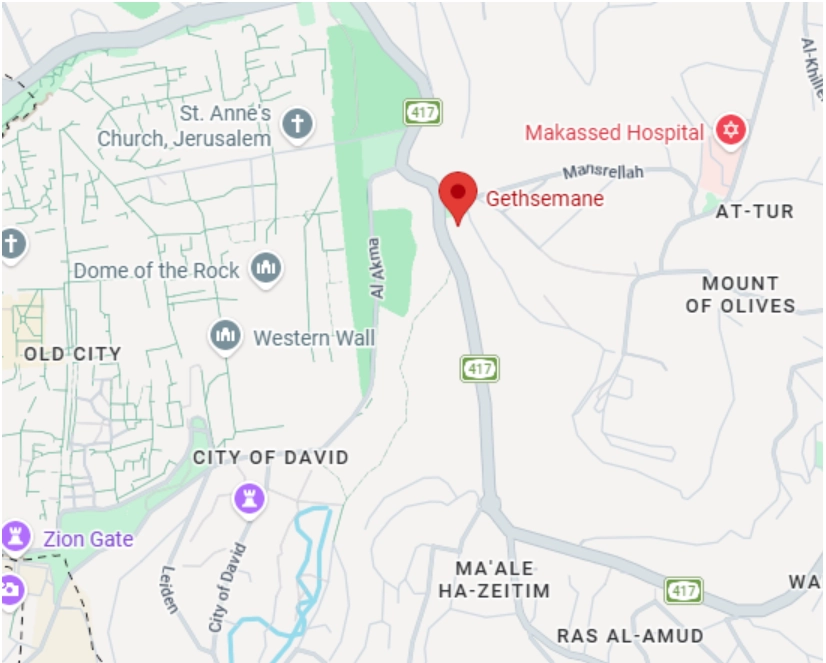
A Biblical Site at the Foot of the Mount of Olives
To truly appreciate gethsemane jerusalem, you need to understand the geography of the area, which acts as a physical backdrop to the biblical narrative. It is a common misconception that the garden sits high up on the mountain overlooking the city. Let’s clarify: it is not at the top of the mount, but rather at the slope or foot of it.
Creating a mental map helps both with your physical travel plans and your spiritual understanding of the gospels:
- The Old City: Where Jesus and his disciples shared the Last Supper (in the Upper Room on Mount Zion).
- The Kidron Valley: The deep ravine they crossed by the light of the Passover moon.
- Gethsemane: The secluded garden at the base of the mountain where they stopped to pray.
- The Mount of Olives: The looming ridge rising behind the garden, offering an escape route into the Judean desert that Jesus notably chose not to take.
This layout perfectly illustrates the entrapment and the willing surrender of that night. With the temple guards descending from the Old City walls across the valley, Jesus and his disciples were situated in the valley’s basin, with the steep mount of olives gethsemane slope at their backs.
The Story of Gethsemane in the Bible
To ask where is gethsemane in the bible is to delve into one of the most emotionally charged narratives in the New Testament. The very word “Gethsemane” comes from the Aramaic Gat Shmanim, which translates to “oil press.” This is a powerful metaphor for the crushing spiritual and emotional weight Jesus endured here.
According to the Gospels of Matthew and Mark, after the Last Supper, Jesus led his disciples across the Kidron Valley to this familiar olive grove. Knowing the horrific suffering that awaited him, the emotional intensity of the moment was palpable. The scriptures describe him as being in agony, sweating drops like blood as he fell to the ground. It was here he prayed his ultimate prayer of surrender: “My Father, if it is possible, may this cup be taken from me. Yet not as I will, but as you will.”
While Jesus prayed, his disciples exhausted from the Passover wine and the late hour repeatedly fell asleep. The heavy stillness of the garden was eventually shattered by the flicker of torches and the clashing of swords. Judas Iscariot arrived, leading a detachment of soldiers, and identified Jesus with a kiss. It was amidst these ancient olive trees that the son of man was betrayed, arrested, and led back across the valley to face trial.
What Visitors Experience at Gethsemane Today
Stepping into the Garden of Gethsemane today is an incredibly sensory experience. Leaving the bustling traffic of modern Jerusalem behind, you are immediately struck by a profound sense of quiet.
The garden is enclosed by a wrought-iron fence, protecting a collection of massive, gnarled, and ancient olive trees. Their thick, twisting trunks look like frozen muscles, enduring centuries of Middle Eastern sun and history. The silver-green leaves rustle softly in the wind, creating a canopy that filters the brilliant sunlight into a soft, reverent glow.
Adjacent to the trees stands the magnificent Church of All Nations. Designed by Italian architect Antonio Barluzzi in the 1920s, the church’s interior is intentionally kept in semi-darkness, illuminated by violet-blue stained glass to recreate the solemn, nocturnal atmosphere of the night of the arrest. At the altar lies the venerated Rock of Agony, the bedrock where tradition holds that Jesus knelt to pray.
The atmosphere here is undeniably that of a global pilgrimage. You will hear the quiet murmurs of prayers in dozens of languages, see pilgrims weeping softly as they touch the ancient rock, and feel the collective reverence of believers from all corners of the earth. Despite the crowds that gather daily, there is an overarching expectation of silence and respect, allowing for deep personal reflection in designated quiet prayer spaces.
The History and Authenticity of the Site
Travelers often ask: Is this the exact spot? The history and authenticity of Gethsemane are backed by one of the most continuous Christian traditions in the Holy Land.
Since the 4th century CE, when the Byzantine Empire legalized Christianity, pilgrims have journeyed to this specific slope to commemorate the Agony in the Garden. While the original Byzantine basilica and a later Crusader church were both destroyed by subsequent conquests, the site itself was never forgotten.
The olive trees themselves add to the site’s mystique. While olive trees do not have traditional growth rings making them notoriously difficult to date, botanical studies and carbon dating of the root systems have shown them to be among the oldest known broad-leaved trees in the world, dating back nearly a millennia. Even if the current trunks sprouted after the Roman destruction of Jerusalem in 70 CE, they are almost certainly the genetic offshoots of the very trees that witnessed Christ’s prayers, as olive trees regenerate from their original roots even when chopped down.
It is worth noting that different Christian denominations maintain slightly different areas of the garden. The Roman Catholic site (next to the Church of All Nations) is the most famous, but the Russian Orthodox Church of Mary Magdalene, with its striking golden onion domes just slightly further up the hill, also encompasses a beautiful and historic section of the biblical garden. This diversity is a testament to the site’s universal importance.
Visiting Gethsemane as Part of a Jerusalem Tour
Because of its strategic location, visiting Gethsemane is incredibly easy to fold into a broader day of exploration. When planning your Jerusalem tours, this site is typically combined with a broader Mount of Olives guide and walking itinerary.
A classic, highly recommended route begins at the top of the Mount of Olives. Here, you can take in the breathtaking panoramic viewpoints of the Old City and the Temple Mount. From there, you can walk down the traditional Palm Sunday route, stopping at the tear-drop-shaped Dominus Flevit Church, before arriving naturally at the Garden of Gethsemane at the bottom of the slope.
After spending time in the garden and the Church of All Nations, the walking distance importance becomes clear: you are just a short, manageable stroll across the Kidron Valley to the Lions’ Gate, where you can enter the Old City and immediately begin walking the Via Dolorosa (The Way of the Cross).
Best times to visit: To avoid the largest crowds and the heat of the midday sun, aim to visit early in the morning when the gates first open, or late in the afternoon. The slanted light of the late afternoon also makes for spectacular photography of the Old City walls from the garden’s vantage point.
Pro Tip: While the garden is open to the public and easy to navigate alone, navigating the historical, botanical, and spiritual layers of the site can be overwhelming. Exploring with an expert guide on a private tour will deeply enhance your understanding, connecting the ancient scriptures to the modern terrain beneath your feet.
Yes, it is located at the western foot of the Mount of Olives. Rather than being situated at the very peak, it sits on the lower slope where the mountain meets the Kidron Valley.
Yes, the garden is preserved and open to visitors today. It features incredibly ancient olive trees and is maintained by the Franciscan Custody of the Holy Land, operating as a quiet sanctuary for global pilgrims.
Facing his imminent arrest and crucifixion, Jesus prayed a prayer of profound surrender. According to the Gospel of Matthew, he prayed: “My Father, if it is possible, may this cup be taken from me. Yet not as I will, but as you will.”
Historically and today, the Garden of Gethsemane is located in East Jerusalem, on the lower slope of the Mount of Olives, sitting near the Kidron Valley just opposite the walls of the Old City.